
Oxide Removal in Sheet Metal Processing
Oxide Removal in Sheet Metal Processing
Thermal cutting processes generate not only slag deposits but also oxide layers on cut edges and adjacent surfaces. These layers form when heated metal reacts with oxygen, creating a modified surface that is no longer metallically clean.
Unlike slag, which consists of solidified molten material mechanically attached to the component, oxide layers are chemically bonded reaction layers. Although significantly thinner, they adhere across the surface and directly influence the properties of the component.
Oxide removal is a dedicated process step within sheet metal edge and surface finishing. The objective is to remove these oxide layers and restore a clean, reactive metallic surface.
This defined component condition is essential for stable downstream operations such as coating and welding, as remaining oxide layers can negatively affect adhesion, process reliability and manufacturing consistency.

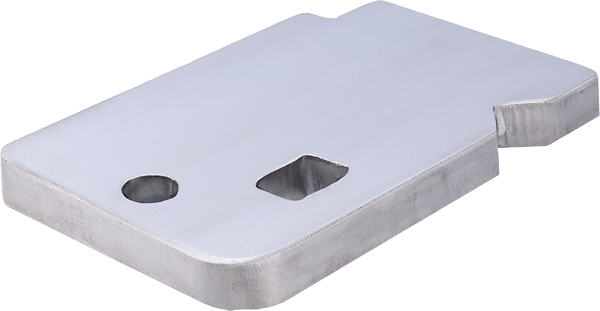
What are Oxide Layers and How Do They Form?
Oxide layers develop during thermal cutting when heated metal reacts with oxygen from the surrounding environment. This reaction creates a thin surface layer that is chemically bonded to the material and differs significantly from the base metal.
During cutting, temperatures rise high enough for the material to melt and oxidize simultaneously. This process leads to the formation of iron oxides along cut edges and adjacent surface areas.
Unlike slag deposits, which adhere as localized accumulations of solidified melt, oxide layers are distributed across the surface as a continuous reaction layer. Because they are chemically bonded, they cannot simply be removed through impact or mechanical knocking.
The extent of oxide formation depends on process parameters such as temperature, oxygen supply and cutting speed. Oxy-fuel cutting typically produces pronounced oxide layers, while plasma cutting often generates thinner but still strongly adhering oxide films.
These oxide layers alter surface characteristics and act as a barrier between the base material and downstream coating, joining or finishing processes.
Why is Oxide Removal Necessary?
Remaining oxide layers on sheet metal components create a modified surface structure that can significantly affect the performance of downstream manufacturing processes.
In coating applications, oxide layers act as a separation layer between the base material and the coating system. This can result in uneven coating thickness, reduced adhesion and coating defects, particularly along cut edges.
Oxide layers also affect welding performance by influencing melt behaviour and weld wetting characteristics. This can lead to inconsistent weld quality, unstable welding conditions and variable joint properties.
In addition, oxide layers create inconsistent reaction conditions in subsequent manufacturing steps, making reproducible results and stable process performance more difficult to achieve.
Targeted oxide removal ensures a clean, reactive metallic surface that supports reliable coating, welding and downstream manufacturing operations.
Oxide Removal from Sheet Metal Parts
Oxide removal is performed through controlled mechanical material removal, where the bonded oxide layer is selectively removed from the component surface. The objective is to create a clean, reactive metallic surface without unnecessarily affecting the base material.
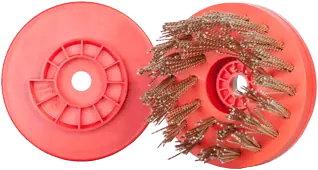
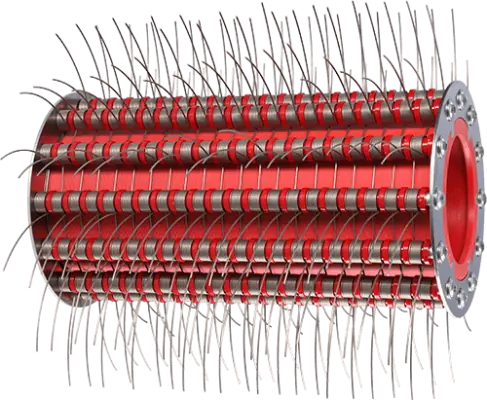
During the oxide removal process, oxide brushes are used to remove oxide layers evenly from edges and surfaces. Controlled tool engagement removes the oxide layer while preserving component geometry.
For larger surface areas, oxide wheels are used to maintain consistent contact with the component surface and ensure reproducible oxide layer removal.
Controlled material removal ensures that oxide layers are completely removed without creating additional surface defects or inconsistent processing marks.
The result is a uniformly cleaned, metallically clean surface that provides stable conditions for coating, welding and subsequent surface finishing operations.
Specialized tool solutions are available for targeted oxide removal and can be selected according to component geometry and process requirements.

Oxide Removal before Coating and Welding
Oxide layers act as a barrier between the base material and downstream coating or joining processes. If they remain on edges and surfaces, adhesion conditions become inconsistent and process stability is reduced.
In coated components, residual oxide layers can cause reduced adhesion, uneven coating thickness distribution and coating defects along edge areas.
In welding applications, oxide layers influence wetting behaviour and melt characteristics. This can result in inconsistent joint properties and reduced process reliability.
Oxide removal creates a metallically clean surface condition and therefore provides the foundation for stable coating processes, reproducible welding operations and reliable downstream manufacturing processes.
Oxide Removal as the Foundation for Stable Downstream Processes
Oxide removal ensures that oxide layers are completely removed and metallically clean surfaces are created. Only under these conditions can coating, welding and other manufacturing processes operate consistently and reliably.
A defined surface condition supports reproducible results, reduces process variation and helps maintain quality throughout subsequent production stages.
Success Stories from our Customers
Through customer-specific tool adaptations, process times can be significantly reduced. One customer application demonstrated that processing time during deburring was reduced by up to 80%.
The latest generation of deburring discs maximizes abrasive contact through an optimized flap arrangement and slot structure. This increases material removal at the sheet metal edge and significantly improves machine performance.
Customers benefit from our extensive application knowledge and process experience. This expertise helps create efficient manufacturing processes and supports reliable production performance.
Variable Oxide Wheel
You are currently viewing a placeholder content from YouTube. To access the actual content, click the button below. Please note that doing so will share data with third-party providers.
More informationCompatible with Leading Machine Manufacturers
FAQ: Oxide Removal in Sheet Metal Fabrication
Find answers to common questions about oxide layers, coating performance, welding quality and mechanical oxide removal. Learn how oxide layers form, why they must be removed and how a clean, reactive metallic surface supports stable downstream manufacturing processes.
Oxide removal is the controlled mechanical removal of oxide layers from cut edges and surfaces of sheet metal components.
The objective is to create a metallically clean, reactive surface condition that supports stable coating, welding and downstream manufacturing processes.
Oxide layers form when heated metal reacts with oxygen during thermal cutting processes.
Oxy-fuel cutting and plasma cutting in particular can create chemically bonded oxide layers along cut edges and adjacent surface areas. These oxide layers adhere firmly to the material and can affect the performance of downstream coating, welding and manufacturing processes.
Oxide layers alter the surface characteristics of sheet metal components and act as a barrier between the base material and downstream coating or joining processes.
Without oxide removal, reduced adhesion, coating defects and unstable welding conditions can occur. Removing oxide layers creates a clean, reactive metallic surface that supports reliable coating performance, consistent weld quality and stable downstream manufacturing processes.
Slag consists of solidified molten material that mechanically adheres to the surface of a sheet metal component.
An oxide layer, by contrast, is a chemically formed reaction layer that is bonded across the surface. Because it is chemically attached to the material, it must be removed through a controlled mechanical oxide removal process.
During the oxide removal process, oxide brushes are used to selectively remove oxide layers from edges and surfaces.
For larger surface areas, oxide wheels are used to provide consistent contact with the component surface and ensure reproducible oxide layer removal. This controlled material removal creates a clean, reactive metallic surface while maintaining the component geometry.
Oxide layers act as a barrier between the base material and the coating system.
As a result, coating adhesion can be reduced, coating thickness distribution may become uneven and coating defects can occur, particularly along cut edges and edge zones.Removing oxide layers creates a clean, reactive metallic surface that supports consistent coating performance and stable coating processes.
Oxide layers influence melt behaviour and weld wetting characteristics during the welding process.
If oxide layers are not removed before welding, they can lead to unstable welding conditions, inconsistent joint properties and reduced process reliability.Removing oxide layers creates a clean, reactive metallic surface that supports stable welding processes and reproducible weld quality.
Yes. Oxide layers can be removed through controlled mechanical material removal.
The key requirement is that the oxide layer is completely removed without creating additional surface defects or inconsistent processing marks. A controlled oxide removal process ensures a clean, reactive metallic surface while maintaining the integrity of the component geometry.
The need for oxide removal depends on the cutting process, cutting gas, material type and the requirements of downstream manufacturing operations.
Oxide layers are particularly significant in oxygen-assisted thermal cutting processes, where oxidation occurs as part of the cutting mechanism. For applications involving coating or welding, oxide removal is often essential to ensure reliable adhesion, stable process conditions and reproducible results.
The goal of oxide removal is to create a metallically clean, reactive surface condition free from interfering oxide layers.
This defined component condition improves coating performance, weldability and the reproducibility of downstream manufacturing processes. By removing oxide layers in a controlled manner, stable conditions are created for coating, welding and further surface finishing operations.
Your Contacts

Marc Böck


Anja Berscheit